Botox is most commonly known for getting the crows feet and wrinkles out of your face. At least that's what is promoted the most about it. However, in reality, botox is used for a lot of medical conditions. If you have get chronic migraines, botox will help. Stiff muscles, a botox injection will take care of it. Even for the some with a overactive bladder.
What about teeth grinding? Yes, it reduces that too. Teeth grinding (medically known as bruxism), is a serious issue that can greatly damage your teeth, cause TMJ, and end being very costly to treat. Most of the time it treated with a mouthguard that is designed to reduce the risk to your teeth. However, even with the mouthguard you are still grinding in your sleep. Instead of grinding tooth to tooth, you are grinding on the mouthguard itself. Which, in essence, still causes the jaw pain and can lead to TMJ. It protects your teeth really good, but has a limited effect to protecting your jaw.
Botox on the other hand, has been proven to great reduce the grinding all together.
So, if you are a chronic teeth grinder, maybe Botox is something to consider.

An interesting and informative site that covers dental related issues and questions. Please enjoy these blogs and feel free to leave your comments. For more information on Savon Dental Plan, please visit our website at www.SavonDentalPlan.com
Friday, February 16, 2018

Wednesday, February 14, 2018
Dental Prosthetics From All Eras
Did you know that 35 Million Americans are missing teeth in one or both jaws?
We all know that replacing missing teeth can be expensive and time consuming but replacing teeth is nothing new. Humans have been replacing teeth for decades.
Lets take a look thought the ages of dental prosthetics:
Stone Age:
If someone had a cavity the ancient dentist would scraped out the hole using a stone tool and then would fill it with bitumen (a tarry substance).
Gold Teeth:
Gold made its debut about 2,500 years ago, and dentistry took full advantage. One of the earliest uses of gold wire was to hold teeth together. Gold was able to interact with water, air, food and the environment of a persons mouth without causing rust or wearing. Picture below is an example of a gold bridge.

Pre-Roman Bridges:
Etruscans crafted some of the oldest known prosthetics and have made one of the earliest attempts at bridges. The picture below is a replica of an Etruscans bridge from around 1901.

Paul Revers, Tool maker:
One of Paul's many talents included dentistry. He would make dental prosthetics using ivory. In 1775, Paul was able to identify the body of a friend thanks to a bridge he crafted himself. This is where the use of dental records and prosthetics came into play when they need to identify bodies.

Modern era:
Modern prosthetics are now made from ceramic. Today, dental prosthetics are held firmly to a patients jaw and are often indistinguishable from natural teeth!

Imagines and more information can be found here!
We all know that replacing missing teeth can be expensive and time consuming but replacing teeth is nothing new. Humans have been replacing teeth for decades.
Lets take a look thought the ages of dental prosthetics:
Stone Age:
If someone had a cavity the ancient dentist would scraped out the hole using a stone tool and then would fill it with bitumen (a tarry substance).
Gold Teeth:
Gold made its debut about 2,500 years ago, and dentistry took full advantage. One of the earliest uses of gold wire was to hold teeth together. Gold was able to interact with water, air, food and the environment of a persons mouth without causing rust or wearing. Picture below is an example of a gold bridge.
Pre-Roman Bridges:
Etruscans crafted some of the oldest known prosthetics and have made one of the earliest attempts at bridges. The picture below is a replica of an Etruscans bridge from around 1901.
Paul Revers, Tool maker:
One of Paul's many talents included dentistry. He would make dental prosthetics using ivory. In 1775, Paul was able to identify the body of a friend thanks to a bridge he crafted himself. This is where the use of dental records and prosthetics came into play when they need to identify bodies.
Modern era:
Modern prosthetics are now made from ceramic. Today, dental prosthetics are held firmly to a patients jaw and are often indistinguishable from natural teeth!
Imagines and more information can be found here!
Monday, February 12, 2018
To Disinfect or Not - A Toothbrush Dilemma
This post is from a couple of years ago but I think with the current flu season upon us and the fact that it is particularly bad this year, it's worth a repost.
It is that time of year again, you know, when viruses abound in the form of head colds, flu, bronchitis, stomach viruses...your kids bring it home from school, it's prevalent in the workplace, grocery stores, etc. When we or someone around us is sick, we tend to reach for that can of Lysol spray or the bottle of bleach and disinfect everything from our doorknobs to our computer keyboards and even the telephone receiver! But....what about our toothbrushes? Unfortunately, there is no clear answer to that. Research differs on the subject. Some healthcare providers suggest that you boil your toothbrush or rinse it in a bleach solution and then with clear water, or even replace it. Others will tell you that there is no need because you cannot reinfect yourself with the same virus over and over as your antibodies will prevent it. Hmmmm.....not so sure I believe that. but to be clear, I am no doctor!
So, who to believe? Personally, I trust my own instincts. To prevent illness from spreading in my household or workplace I will disinfect everything you can imagine that may have have a hint of a virus. Now, this is a personal thing and others may not feel that way but I prefer to err on the side of caution, and my "phobia" has served me pretty well over the years! Follow your instincts. If you think it will help to disinfect your toothbrush then do it, if for no other reason than your own piece of mind!
Stay Healthy and Keep Smiling!
It is that time of year again, you know, when viruses abound in the form of head colds, flu, bronchitis, stomach viruses...your kids bring it home from school, it's prevalent in the workplace, grocery stores, etc. When we or someone around us is sick, we tend to reach for that can of Lysol spray or the bottle of bleach and disinfect everything from our doorknobs to our computer keyboards and even the telephone receiver! But....what about our toothbrushes? Unfortunately, there is no clear answer to that. Research differs on the subject. Some healthcare providers suggest that you boil your toothbrush or rinse it in a bleach solution and then with clear water, or even replace it. Others will tell you that there is no need because you cannot reinfect yourself with the same virus over and over as your antibodies will prevent it. Hmmmm.....not so sure I believe that. but to be clear, I am no doctor!
So, who to believe? Personally, I trust my own instincts. To prevent illness from spreading in my household or workplace I will disinfect everything you can imagine that may have have a hint of a virus. Now, this is a personal thing and others may not feel that way but I prefer to err on the side of caution, and my "phobia" has served me pretty well over the years! Follow your instincts. If you think it will help to disinfect your toothbrush then do it, if for no other reason than your own piece of mind!
Stay Healthy and Keep Smiling!
Friday, February 9, 2018
First Aid For A Broken Or Knocked Out Tooth
If you have ever broke a permanent tooth or had one knocked out, there is always that moment of "What Do I Do Next". Well, hopefully this can give you some insight.
It is important to remember, that you have about a 30 minute window to save the tooth a increase the chance that it can be successfully re-implanted into your mouth.
Here are some first aid tip to help you!
It is important to remember, that you have about a 30 minute window to save the tooth a increase the chance that it can be successfully re-implanted into your mouth.
Here are some first aid tip to help you!
1. Collect Teeth or Teeth Fragments
- Handle teeth carefully because damage may prevent re-implantation.
- Touch only the crown, the top part of the tooth. Do not touch the root of the tooth.
- Rinse the tooth gently in a bowl of lukewarm water for no more than 10 seconds only if there is dirt or foreign matter on it. Do not scrub, scrape, or use alcohol to remove dirt.
2. Re-Insert or Store Teeth
- Rinse mouth with warm water.
- If possible, reinsert permanent teeth into the correct sockets and have the person bite on a gauze pad to hold teeth in place.
- If you can't reinsert permanent teeth, or for baby teeth or teeth fragments, store them in whole milk or between your cheek and gum to prevent drying.
- Control bleeding with sterile gauze or cloth.
- For pain and swelling, apply a cool compress. Encourage a child to suck on a frozen pop.
- For teeth that have been knocked out, see a dentist or go to an emergency room immediately. Take the teeth or teeth fragments with you. Even if the teeth have been successfully reinserted, you should see a dentist.
- For chipped or broken teeth, call a dentist.
Wednesday, February 7, 2018
Dental Impressions
Getting a dental impression is not a pleasant or a comfortable procedure for those of us who have a gag reflex but getting those impressions play an important part into your oral health!
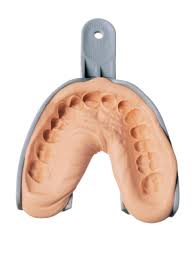
Dental impressions produce a replica of your teeth and oral tissue and are used for many different procedures including: Crowns, mouth guards, whitening trays, retainers, bridges, veneers, dentures and other things.
To make a impression of your mouth the dentist or their assistant will mix up a material and put that into a impression try, then they will slowly insert it into your mouth so it covers the entire dental arch. After the material has hardened they will remove the try and the impression will be sent to the lab for further processing.
Here are a few pointer if you need a dental impression in the future ask the dentist or the assistant if you can sit up during the procedure, try breathing through your nose and try to focus on anything else besides the gunk in your mouth. Once the impression has been removed ask for a sip of water or mouthwash to rise out your mouth.
Tuesday, February 6, 2018
Tooth Enamel Erosion-Once It's Gone, It's Gone.
Dental enamel, unlike bones, does not regenerate or "heal" once it is damaged. Dental enamel is formed during the original growth of the tooth underneath the gums. While there are many factors that can contribute to the loss of dental enamel, such as poor dental hygiene or certain hereditary conditions, there is good news. Researchers are actively seeking treatments and therapies that could change everything. Of course, proper hygiene and regular visits to your dentist are the best way to combat any kind of dental dilemma, but for dental enamel in particular, there are now certain treatments that can help slow the process of enamel degeneration that can be applied during your regular dental visits as part of your preventative maintenance regimen. There is also a plethora of information circulating on the internet that implies there are certain natural remedies that can heal cavities and regenerate tooth enamel, although it isn't scientifically proven as yet.
Keep Smiling!
Friday, February 2, 2018
After Flu Season, Always Change Your Toothbrush!
Following every flu season and this could include the current COVID pandemic, if you are anything like me, you do the normal routine: Wash blankets, pillow cases, sheets and basically disinfect the whole house. Especially if you or someone in your household has been ill.
However, one thing that often gets overlooked is your toothbrush! Even if you didn't have the flu, you want to make sure you replace it. Airborne viral bacteria can attach to basically anything, including your toothbrush and theoretically it can transfer to your body when you brush your teeth.
There is a common misconception that toothbrush bacteria is harmless. Afterall, you are the only one who uses it, right? Well, consider this: The bristles on the toothbrush are tall and there are many areas for bacteria to hide. The toothpaste does not clean or disinfect the brush. Soaking it in mouthwash from time to time can be helpful, and a good rinsing every time you brush is a good practice. Still, the ADA recommends that you replace your toothbrush after a viral or bacterial illness or every 3 months to prevent the spread of infection.
However, one thing that often gets overlooked is your toothbrush! Even if you didn't have the flu, you want to make sure you replace it. Airborne viral bacteria can attach to basically anything, including your toothbrush and theoretically it can transfer to your body when you brush your teeth.
There is a common misconception that toothbrush bacteria is harmless. Afterall, you are the only one who uses it, right? Well, consider this: The bristles on the toothbrush are tall and there are many areas for bacteria to hide. The toothpaste does not clean or disinfect the brush. Soaking it in mouthwash from time to time can be helpful, and a good rinsing every time you brush is a good practice. Still, the ADA recommends that you replace your toothbrush after a viral or bacterial illness or every 3 months to prevent the spread of infection.
Subscribe to:
Posts (Atom)
